
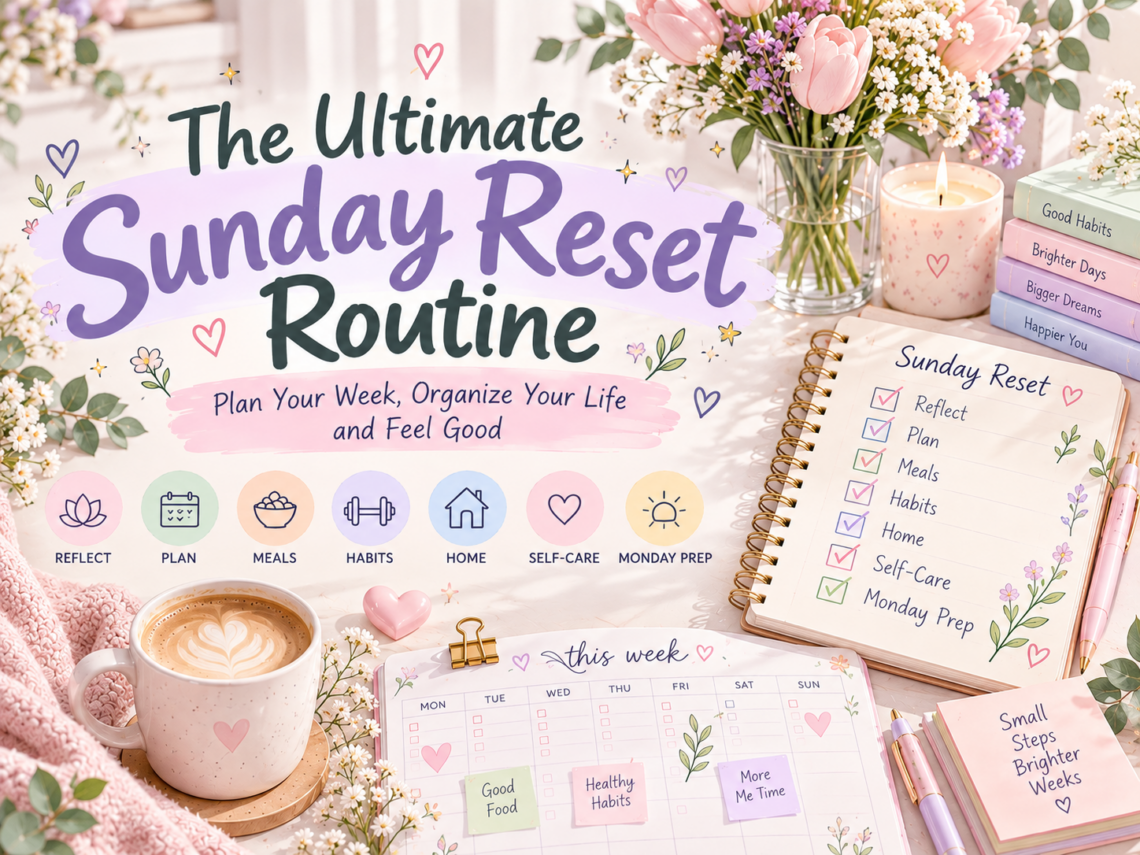
Sunday has a strange way of making Monday feel closer than it really is.
The weekend is ending. Your calendar is filling up again. There are meals to figure out, errands to remember, habits you want to keep, and a growing list of things you meant to do last week.
That is where a Sunday reset routine can change the feel of your entire week.
A good Sunday reset is not about spending five hours cleaning your home, preparing perfectly portioned meals, or creating an impossibly detailed schedule.
It is about creating enough order that Monday feels easier.
Your goal is simple:
Clear your head. Plan what matters. Prepare your space. Take care of yourself.
This Sunday reset routine brings all four together.
What Is a Sunday Reset?
A Sunday reset is a weekly routine designed to help you close out the previous week and prepare for the one ahead.
It can include:
- weekly planning
- meal planning
- grocery planning
- habit tracking
- home organization
- self-care
- journaling
- exercise planning
- setting weekly priorities
- preparing for Monday
The best part?
You can make your Sunday reset as short or as detailed as your week requires.
Some Sundays may need a full reset.
Other Sundays may need only 20 minutes and a piece of paper.
The goal is not to create a perfect Sunday.
The goal is to make your next seven days easier to navigate.
Your Simple Sunday Reset Routine
Here is the order I recommend:
| Reset Area | What to Do | Time |
|---|---|---|
| 1. Reflect | Review the previous week | 5–10 min |
| 2. Plan | Choose priorities and schedule | 10–15 min |
| 3. Meals | Plan meals and groceries | 10–15 min |
| 4. Habits | Choose a few habits to focus on | 5 min |
| 5. Home | Reset your most-used spaces | 15–30 min |
| 6. Self-Care | Plan something that helps you recharge | 10–20 min |
| 7. Monday Prep | Prepare the first morning of the week | 5–10 min |
You do not need to complete every section every Sunday.
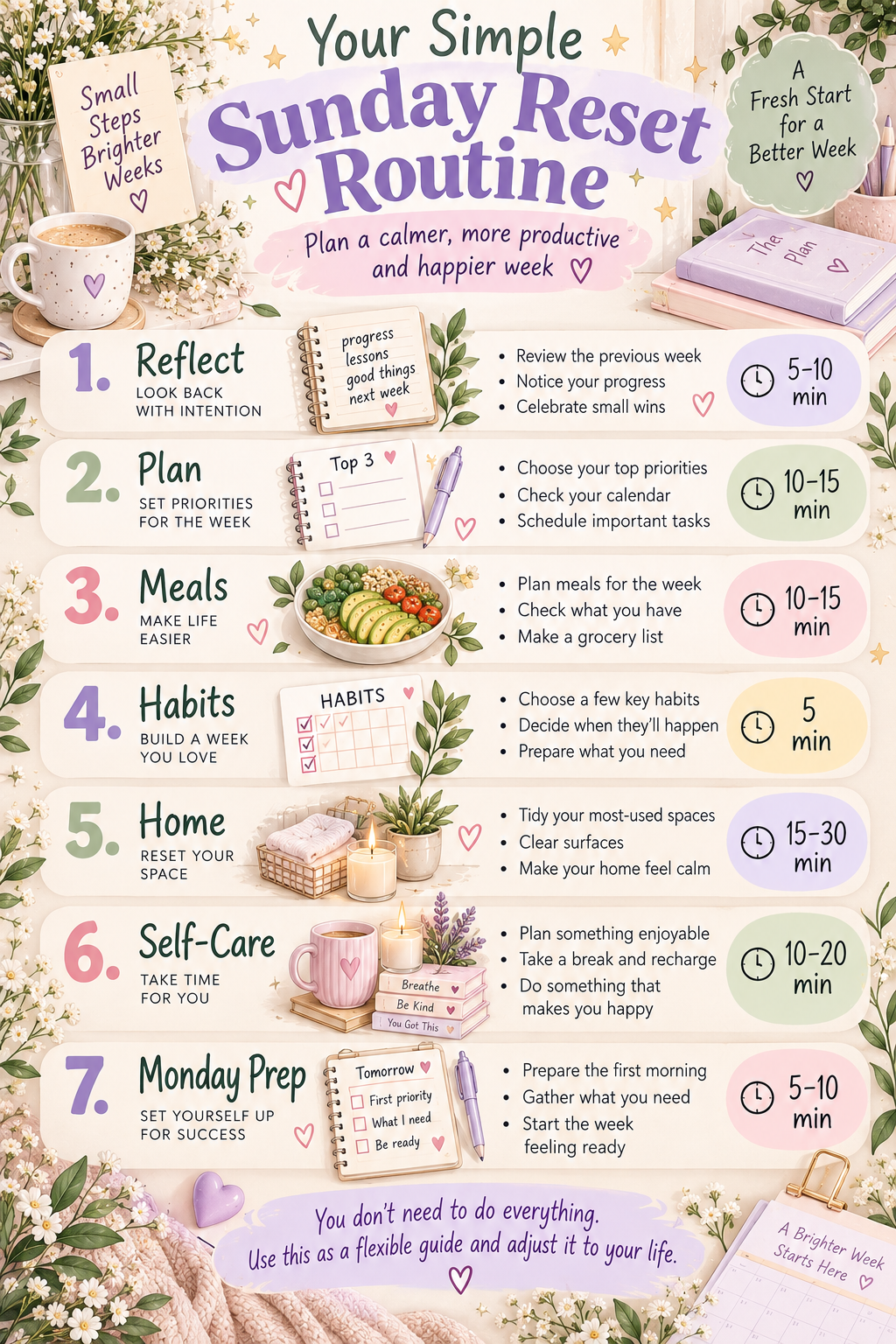
Use the list as a framework, then adjust it to your actual life.
1. Start With a Weekly Brain Dump
Before planning the new week, empty your head.
Grab a notebook, planner page, or blank sheet of paper and write down everything currently taking up mental space.
Think about:
- unfinished tasks
- appointments
- errands
- work or school deadlines
- messages you need to answer
- things you need to buy
- household tasks
- personal goals
- ideas you do not want to forget
Do not organize the list while you write it.
Just get everything out.
A brain dump works best when it is messy.
Once everything is on the page, you can decide what actually deserves your attention this week.
Try This Sunday Reset Prompt
What is taking up space in my mind right now?
Write until you run out of things to write.
Then ask:
What actually needs to happen this week?
That second question is where your weekly plan begins.
2. Choose Your Top 3 Priorities
Your weekly planner does not need to become a giant list of everything you could possibly accomplish.
Choose three priorities.
They can be:
- a work project
- a personal goal
- an important appointment
- a home project
- a health habit
- a creative project
- something you have been putting off
Write them somewhere visible.
My Top 3 Priorities
1. ______________________________
2. ______________________________
3. ______________________________
Then look at your calendar.
Where will these priorities actually fit?
This small step turns vague intentions into scheduled actions.
If you want more structure for your week, explore DigiGlade’s Planning and Productivity resources for printable planning tools designed around organization, focus and daily planning.
3. Plan Your Week Before It Starts
Now move from priorities to your actual schedule.
Check:
- appointments
- meetings
- school or work commitments
- workouts
- social plans
- errands
- deadlines
- family commitments
- important dates
Then add your three weekly priorities.
Leave some empty space.
A packed calendar creates a fragile week. One unexpected task can throw everything off.
Instead, build your schedule around what matters most and leave room for real life.
A Simple Weekly Planning Formula
Fixed commitments + Top 3 priorities + Essential errands + Rest and personal time = A realistic weekly plan
Your week should have space for both productivity and recovery.
4. Create Your Weekly Meal Plan
This is one of the most useful parts of a Sunday reset.
Instead of asking yourself every afternoon:
“What should I eat today?”
Decide before the week begins.
You do not need seven complicated recipes.
Start with a simple structure.
Example Weekly Meal Plan
| Day | Dinner | Prep Note |
|---|---|---|
| Monday | Easy favorite | Use ingredients already at home |
| Tuesday | One-pan meal | Minimal cleanup |
| Wednesday | Leftovers | No extra cooking |
| Thursday | Quick meal | Keep it simple |
| Friday | Flexible meal | Eat out or make a favorite |
| Saturday | New recipe | Try something different |
| Sunday | Simple dinner | Prepare for Monday |
Then create your grocery list.
Check your kitchen before buying anything.
This prevents duplicate purchases and makes your grocery trip faster.
For more structured meal and fitness planning, you can also explore the Meal & Fitness Planner Printable PDF from DigiGlade.
5. Choose Your Weekly Habits
A Sunday reset is the perfect time to decide which habits deserve your attention.
But keep the list short.
Instead of creating a 15-habit routine that looks beautiful on paper and disappears by Wednesday, choose a few habits you can actually repeat.
For example:
My Weekly Habit Focus
- Drink enough water
- Move my body
- Eat regular balanced meals
- Take short breaks
- Spend less time scrolling
- Read before bed
- Journal
- Keep my workspace tidy
- Prepare tomorrow’s priorities
Pick three to five.
Then decide when each habit will happen.
For example:
Morning: water + 5-minute planning
Afternoon: movement break
Evening: quick tidy + reflection
Habits become easier to remember when they have a place in your day.
DigiGlade’s Habit Building and Self-Care & Wellness content can be a useful next stop if you want printable tools for tracking routines and creating more intentional weeks.
6. Give Your Home a Mini Reset
You do not need to deep-clean your entire home every Sunday.
Focus on the spaces you use the most.
Try this quick reset:
15-Minute Home Reset
☐ Clear the kitchen counters
☐ Put away clothes
☐ Empty the trash
☐ Reset your desk
☐ Change or straighten your bedding
☐ Put everyday items back in place
☐ Prepare anything you need for Monday
Start with the area that creates the most visual clutter.
You will notice the difference faster.
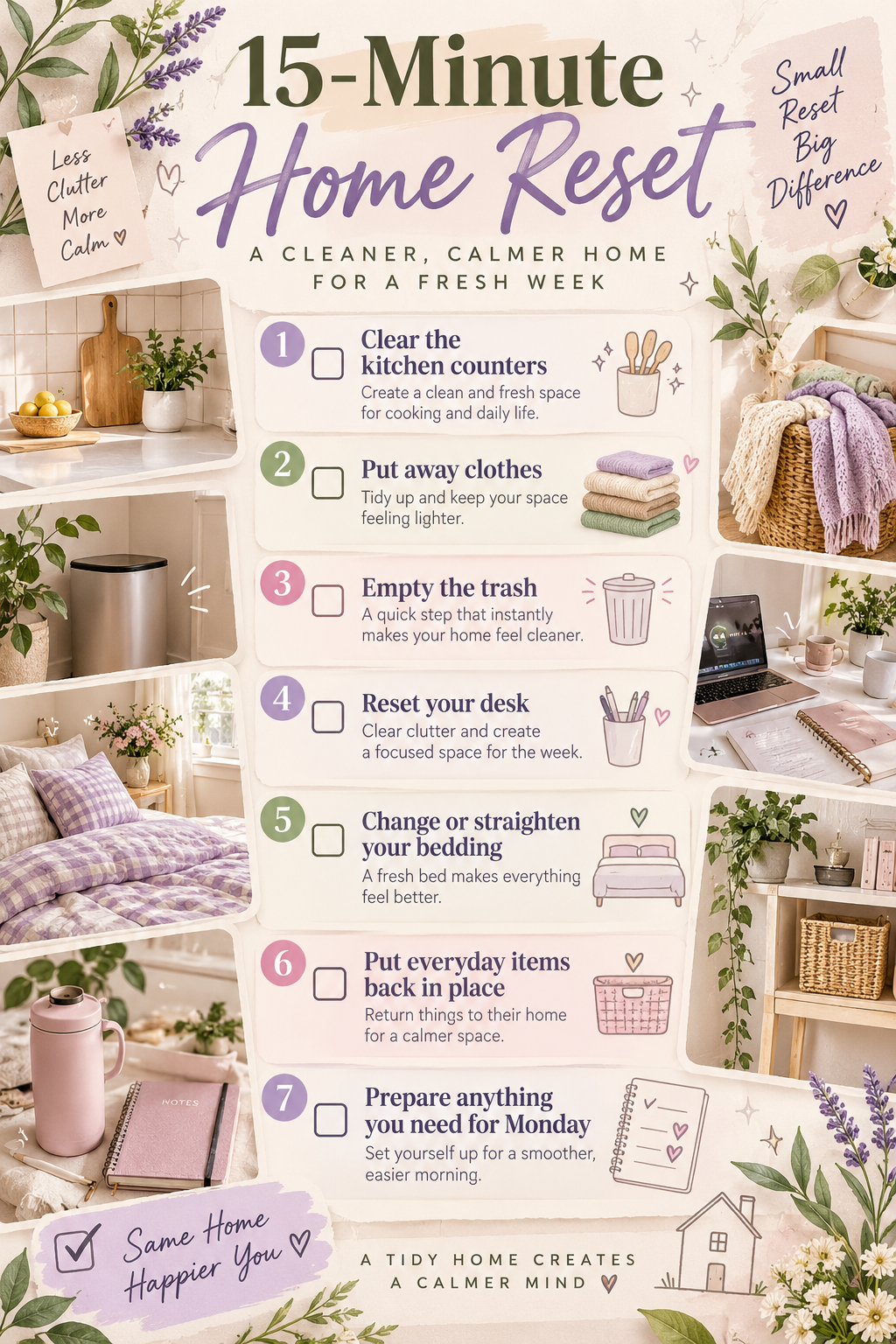
Save this checklist to your Pinterest board for your next planning session!
If home organization is one of your weekly priorities, explore the Home Organization section of DigiGlade for more planning and organization ideas.
7. Schedule Self-Care Before the Week Gets Bus
Self-care works better when it has a place in your calendar.
Do not wait for the perfect free evening.
Choose one or two simple things you genuinely enjoy.
It could be:
- reading
- journaling
- taking a walk
- listening to music
- having a quiet evening
- spending time with someone you love
- doing a creative hobby
- taking a screen break
- preparing a favorite drink
- simply doing nothing for a while
Your self-care does not need to look impressive.
It needs to feel like yours.
My Self-Care Plan This Week
Something I want to do:
When I’ll do it:
Why it matters to me:
That last question is useful.
It turns self-care from another task on your checklist into something intentional.
For more printable ideas around routines, wellness and personal organization, visit DigiGlade’s Self-Care & Wellness category.
8. Take 5 Minutes to Reflect
Before you finish your Sunday reset, look back.
You do not need a complicated journaling session.
Answer these five questions:
Sunday Reflection Questions
- What went well this week?
- What felt difficult?
- What am I proud of?
- What do I want to do differently next week?
- What do I want more of next week?
This creates a simple weekly feedback loop.
You are not starting from zero every Monday.
You are learning from the week you just lived.
For more journaling and reflection ideas, visit DigiGlade’s Journaling category.
9. Prepare for Monday
The final step is surprisingly simple.
Make Monday morning easier.
Before you finish your Sunday reset:
☐ Check tomorrow’s schedule
☐ Choose your first priority
☐ Prepare anything you need
☐ Check your bag or workspace
☐ Review your meal plan
☐ Set out anything you need in the morning
☐ Decide what time you want to start your day
Then stop.
You are done.
There is no prize for adding another 27 tasks to your Sunday.
The Ultimate Sunday Reset Checklist
Save this checklist and use it every Sunday.
Sunday Reset Checklist
Reflect
☐ Review the past week
☐ Write a quick brain dump
☐ Celebrate one win
☐ Identify one lesson
Plan
☐ Check your calendar
☐ Choose 3 priorities
☐ Schedule important tasks
☐ Leave space for unexpected things
Meals
☐ Choose meals for the week
☐ Check your kitchen
☐ Create a grocery list
☐ Plan easy meals for busy days
Habits
☐ Choose 3–5 habits
☐ Decide when they will happen
☐ Prepare anything that makes them easier
Home
☐ Reset your workspace
☐ Tidy the kitchen
☐ Put things back where they belong
☐ Prepare for Monday
Self-Care
☐ Schedule one enjoyable activity
☐ Plan some quiet time
☐ Choose something that helps you recharge
Monday
☐ Check tomorrow’s schedule
☐ Choose your first priority
☐ Prepare what you need
☐ Go to bed with a clear plan
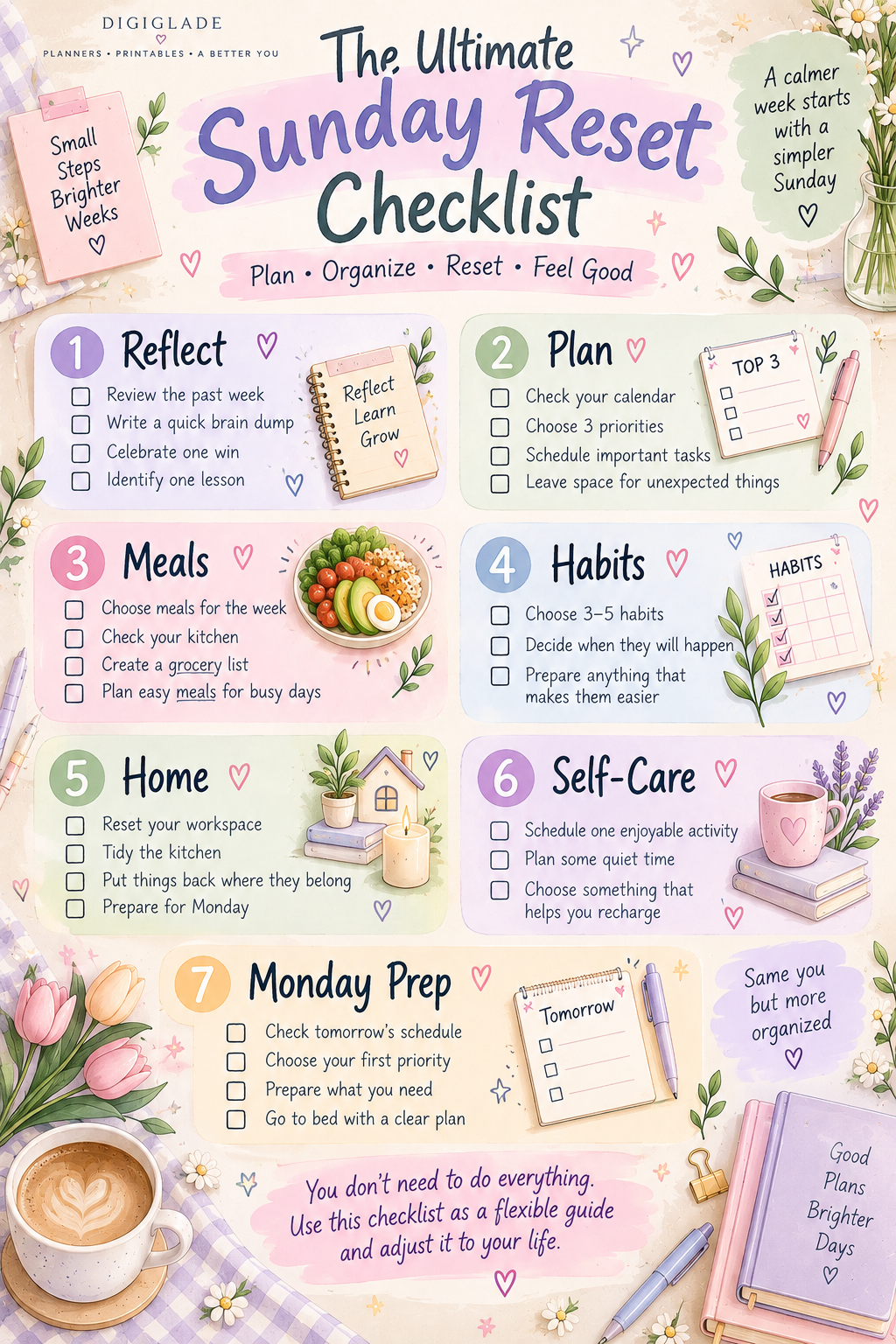
Found this helpful? Save it to your favorite Pinterest board and revisit it anytime.
A 30-Minute Sunday Reset for Busy Weeks
Some Sundays are busy too.
If you only have 30 minutes, use this version.
Minutes 1–5: Brain Dump
Write down everything you need to remember.
Minutes 6–10: Pick Your Top 3
Choose the three things that matter most this week.
Minutes 11–17: Plan Your Meals
Choose simple meals and make your grocery list.
Minutes 18–22: Check Your Calendar
Add appointments, deadlines and important commitments.
Minutes 23–26: Choose Your Habits
Pick three habits for the week.
Minutes 27–30: Prepare for Monday
Choose tomorrow’s first priority and prepare anything you need.
That’s enough.
A useful Sunday reset should make your life feel more organized, not give you another reason to feel behind.
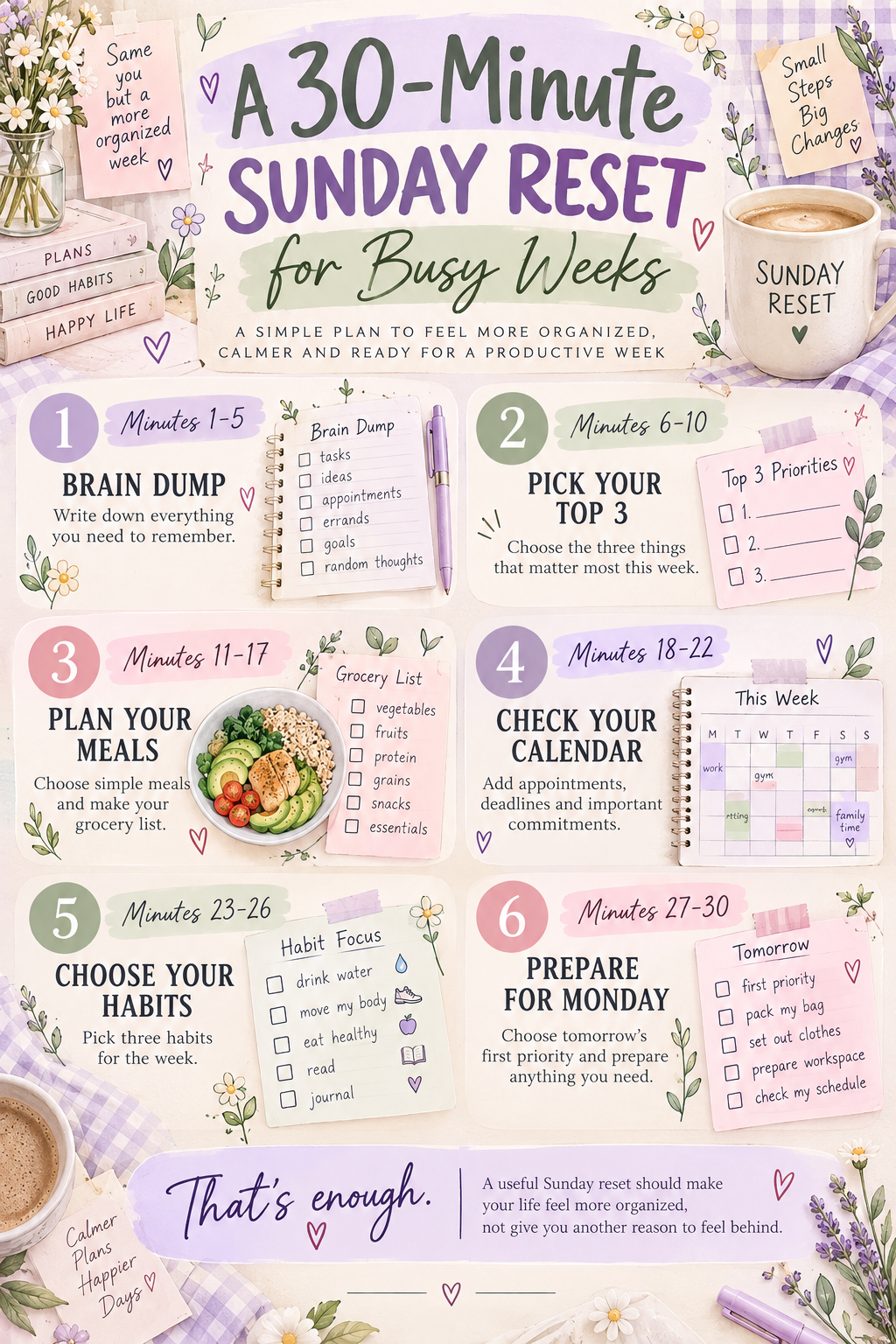
Busy week ahead? Save this 30-minute Sunday Reset checklist to Pinterest and come back to it every weekend!
Make Your Sunday Reset Work for You
There is no universal Sunday reset routine.
Your reset should reflect your actual week.
If you have a busy week ahead, spend more time planning.
If your calendar is quiet, use the time for reflection, creativity or rest.
If meal planning saves you the most stress, make that the center of your reset.
If your home feels chaotic, start there.
If your mind feels overloaded, begin with a brain dump.
The best routine is the one you can repeat.
You do not need a perfect week. You need a clear starting point.
Your Sunday Reset, Simplified
If you remember nothing else, remember these seven steps:
1. Reflect on last week.
2. Clear your head.
3. Choose your top three priorities.
4. Plan your meals.
5. Choose your key habits.
6. Reset your space.
7. Prepare for Monday.
Then give yourself permission to stop planning.
Your Sunday is still part of your life.
It does not exist only to prepare you for work, school, errands and responsibilities.
Leave room for rest.
Leave room for something fun.
Leave room for yourself.
That is what makes a Sunday reset sustainable.
Ready to Plan Your Week?
A good weekly plan can turn a scattered list of intentions into something you can actually see, organize and follow.
If you love printable planning, journaling and simple organization systems, explore more DigiGlade resources for Planning, Productivity, Printables, Journaling and Self-Care & Wellness.
And if you want ready-to-use printable planning tools for your next weekly reset:
Explore the DigiGlade shop and find printable planners designed to help you organize your week, your routines and your goals.